Headstone Inscription Ideas
Headstone Wording
& Inscription Ideas
Finding the right words for a headstone is one of the most personal decisions a family makes. We're here to help.
Finding the right words for a headstone is one of the most personal decisions a family makes. We're here to help.
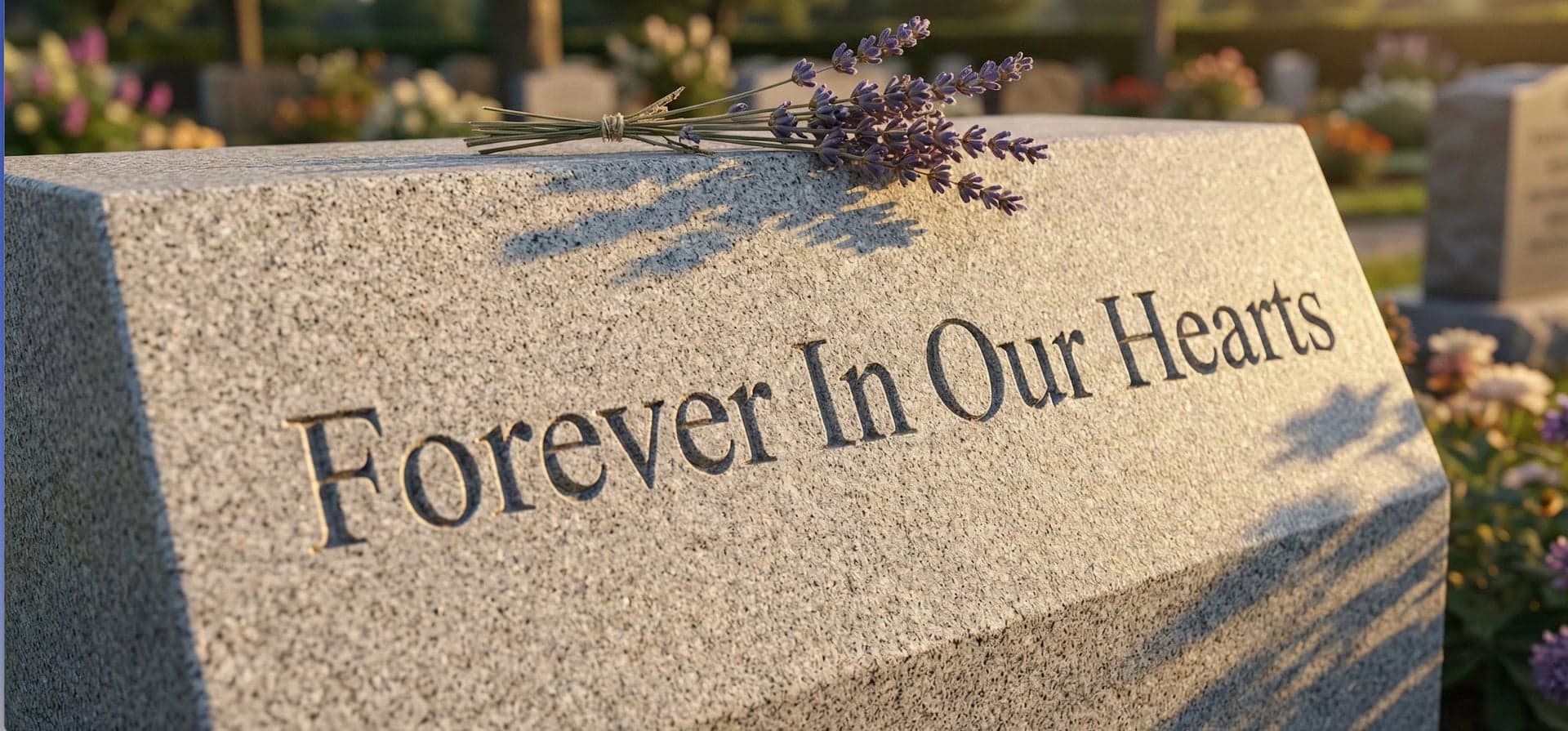
Choosing the words for a headstone inscription is one of the most personal decisions a family makes during an already difficult time. What matters is that the inscription feels right for the person being remembered and the family doing the remembering.
This page offers guidance and examples to help you find the right words. Our masons are also always happy to help directly, whether you have something in mind and want to refine it, or you're not sure where to start.
Most headstone inscriptions follow a similar structure, though every element is optional and can be adapted to your family's preferences:
A traditional opening that introduces the memorial. Common examples include: In Loving Memory of, Sacred to the Memory of, In Memory of, Beloved [husband / wife / father / mother], Here Lies.
The full name of the deceased — first name, middle name (if used) and surname. Some families include a preferred name or nickname in addition.
Date of birth and date of passing.
Who this person was to the family. Examples: Beloved husband of [name], father of [names] · Dearly loved wife and mother · Cherished son / daughter / brother / sister.
A personal message, quote, verse or religious phrase that captures something of the person's life, faith or spirit. This is often the most meaningful part of the inscription and the element families spend the most time on.
R.I.P / Rest in Peace · Requiescat in Pace (Catholic / Latin) · May he/she rest in God's peace · ת.נ.צ.ב.ה (May their soul be bound up in the bond of eternal life — Jewish).
The closing inscription is your opportunity to say something personal and lasting. Below are some examples across different styles and traditions to give you a starting point.
Catholic headstones commonly include R.I.P., a Biblical verse or prayer, and reference to the family's faith. Common closings include “Called home to God”, “In God's loving care” and “Requiescat in Pace.” See our full Catholic headstone wording guide → for prayers, scripture examples, symbols and traditions.
Jewish headstones typically carry both Hebrew and English text. The Hebrew inscription follows a traditional structure: פ"נ (Here lies buried), the Hebrew name of the deceased, the Hebrew date of passing, and the closing ת.נ.צ.ב.ה. The English section may include a personal closing inscription. See our full Jewish headstone wording guide → for Hebrew inscription structure, symbols and unveiling traditions.
Anglican monuments typically include a Biblical verse or prayer alongside the standard inscription elements. Common closings include “At rest”, “Called to glory” and verses from the Psalms or New Testament. See our Protestant monuments page → for more detail.
Orthodox monuments typically carry bilingual inscriptions in English and Greek, Serbian, Russian or another heritage language. Religious iconography and a closing prayer are common. See our full Greek Orthodox headstone wording guide → for the traditional Greek inscription structure, ceramic photographs and the 40-day memorial.
Chinese monuments often carry both English and Chinese character inscriptions. Traditional elements include the family name prominently displayed, dates of birth and passing, and filial relationship phrases. Gold leaf lettering on black granite is a popular choice. Our masons are experienced in setting out Chinese character inscriptions correctly alongside English text. See our Chinese monuments page → for more detail.
Muslim headstones are typically simple and modest in keeping with Islamic tradition. Common elements include “In the name of Allah, the most gracious, the most merciful”, the date of passing in both the Gregorian and Hijri calendars, and the phrase “Inna lillahi wa inna ilayhi raji'un” (Indeed, to Allah we belong and to Allah we shall return). Verses from the Quran are also used.
We are here to guide you through every decision, honestly and without pressure. Speak with one of our experienced masons today about your inscription.